
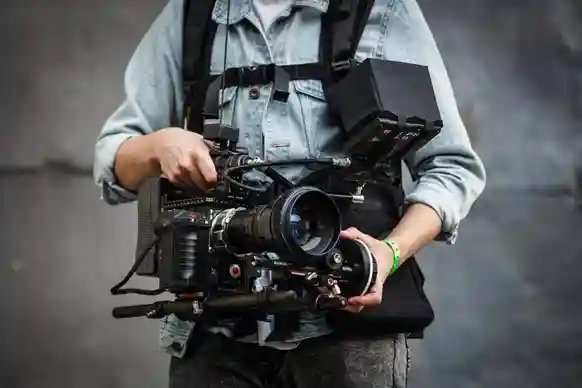
Professional cinema production depends heavily on the capabilities of the camera system at its centre. The ability to capture images with the dynamic range, colour science, and resolution that post-production demands has defined the choice of camera system for serious productions for decades. As technology has advanced, the gap between professional cinema cameras and consumer equipment has grown in some ways more pronounced, even as costs have become more accessible.
What Sets Cinema-Grade Cameras Apart
Cinema cameras are engineered around the specific requirements of narrative and commercial production rather than consumer convenience. Larger sensors capture more light with less noise, enabling performance in challenging lighting conditions that consumer cameras cannot match. Latitude, which is the camera’s ability to retain detail in both the brightest highlights and darkest shadows simultaneously, is critical for productions where lighting control is limited.
Colour science is equally important. The way a camera renders skin tones, saturated colours, and neutral gradations determines how the image responds to the colour grading process in post-production. Cameras with sophisticated colour science give colourists more to work with and produce images that retain quality through extensive grading without degrading.
Full-Frame Sensor Advantages
Full-frame and large-format sensors have become increasingly important in professional production as the aesthetic associated with them has become an industry expectation in many markets. The combination of shallow depth of field, natural perspective, and low-light performance these sensors provide has been central to the look of premium productions across film, television, and advertising.
The sony venice camera established itself as a benchmark system in this category, particularly valued for its colour rendering and operational flexibility. Its successor has built on these foundations with enhanced resolution and improved sensor performance that extends the system’s capabilities across an even wider range of production demands.
Renting vs. Owning
For most production companies and independent filmmakers, renting professional cinema systems is more practical than ownership. The technology evolves rapidly, and rental allows productions to choose the most appropriate system for each project rather than being limited by owned equipment. Reputable rental houses maintain their inventory in production-ready condition with current firmware and provide technical support for complex configurations.
When evaluating rental options for the sony venice 2 camera or equivalent cinema systems, confirm availability for your production dates, the included accessories package, and the provider’s technical support policy if issues arise during the production period.
Lens Selection and Its Creative Impact
While the camera body determines the technical foundation of an image, lenses play a major role in shaping its final look and emotional tone. Different focal lengths influence perspective, depth, and how subjects are separated from their background, which makes lens choice a key creative decision in both narrative and commercial work.
Wide-angle lenses can create a sense of scale and environment, while longer focal lengths compress space and isolate subjects more dramatically. Prime lenses are often preferred in cinema production for their sharpness, faster apertures, and consistent optical characteristics, while zoom lenses offer flexibility when shooting fast-paced or logistically complex scenes.